
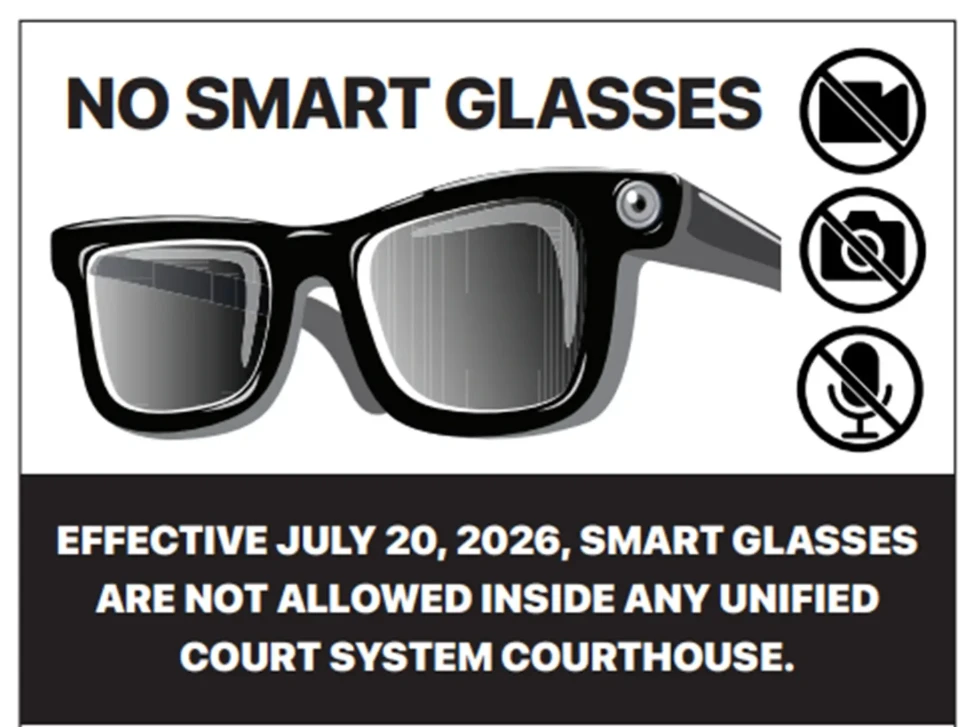
Smart glasses are moving from science-fiction novelty to an everyday eyewear category. Models such as Ray-Ban Meta combine ordinary-looking frames with cameras, microphones, speakers and artificial-intelligence assistants. They can take photos, record short videos, answer questions and livestream without requiring the wearer to hold a phone. For shoppers, that convenience is a major attraction. For everyone standing nearby, however, the technology raises a difficult question: when does a useful wearable become an unnoticed surveillance device?
The concern begins with the glasses’ appearance. A smartphone usually gives visible signals that a person is taking a picture. Smart glasses can look like conventional sunglasses or prescription frames, so bystanders may not know when the camera is active. A small recording indicator is intended to provide notice, but critics question whether it is always visible in bright conditions, from a distance or in a busy public place. The debate is particularly sensitive in schools, workplaces, changing rooms, medical settings and private homes, where people may reasonably expect not to be recorded.
Manufacturers argue that clear design safeguards can reduce the risk. In its announcement of the second-generation Ray-Ban Meta glasses, Meta said the product includes a camera, five microphones and direct livestreaming to Facebook or Instagram. The company also describes an external capture LED and says that the glasses are designed for hands-free photography and video. These features show both sides of the issue: the glasses are convenient precisely because they can capture a wearer’s point of view quickly, but that same frictionless recording can make consent harder to obtain.
Privacy questions also extend beyond the moment of recording. A captured image may include faces, voices, conversations, license plates, documents or information displayed on a computer screen. Once the file is transferred to a phone, cloud service or social-media platform, users must consider who can access it, how long it is retained and whether artificial-intelligence systems may analyze it. Voice assistants create another layer of uncertainty because spoken commands and surrounding audio may pass through connected services. Even when a company does not intend to identify bystanders, the data can still reveal where people were, what they said and who they were with.
Regulators and privacy organizations have long warned that camera-equipped devices should be used transparently and proportionately. The UK Information Commissioner’s Office says organizations using cameras must consider privacy expectations, provide appropriate information and limit collection to a justified purpose. Those principles are increasingly relevant to consumers wearing recording-enabled glasses in public. Local laws also differ: some jurisdictions require consent from everyone in a recorded conversation, while others permit recording in circumstances where one participant agrees.
The technology can also deliver genuine benefits. Hands-free cameras may help people document travel, communicate with family, navigate unfamiliar places or access AI assistance without looking down at a phone. For people with certain disabilities, audio guidance and voice control may improve independence. The goal, therefore, is not necessarily to ban smart glasses, but to establish social rules that make their use predictable and respectful.
For buyers, responsible use starts with simple habits: tell people before recording, switch off voice and camera features in sensitive locations, avoid filming confidential information, review app permissions and delete unwanted files. Retailers can help by explaining recording indicators, data settings and local restrictions rather than presenting smart glasses as ordinary accessories alone.
As cameras become smaller and AI becomes more capable, the privacy debate will follow smart glasses into more parts of daily life. The success of the category may depend not only on battery life, audio quality or frame design, but also on whether people around the wearer feel informed, respected and in control.
Sources1. Meta Newsroom, “Introducing the New Ray-Ban | Meta Smart Glasses,” September 27, 2023: https://about.fb.com/news/2023/09/new-ray-ban-meta-smart-glasses/2. Information Commissioner’s Office (UK), “Video surveillance and data protection”: https://ico.org.uk/for-organisations/sme-web-hub/how-to-comply-with-data-protection-law/video-surveillance-and-cctv/3. Meta Privacy Center, “Ray-Ban Meta smart glasses privacy”: https://www.meta.com/help/ai-glasses/articles/privacy-and-safety/privacy-ray-ban-meta-smart-glasses/