
Lightarc | Lens Material R&D Update
Eyeglass lenses need to provide clear vision while remaining light, comfortable, and durable. Because plastic lenses are generally softer than glass, their surfaces can be affected by daily cleaning, carrying, and accidental contact. To improve lens durability, Lightarc has recently continued its research into new lens materials and hard-coating technologies, including metal-oxide sols.
Why hard coatings matter
Many modern prescription lenses are made from materials such as CR-39, polycarbonate, or high-index plastics. These materials can be lighter than glass and may offer advantages such as impact resistance or thinner lens designs. However, plastic surfaces can be more vulnerable to abrasion.
A hard coating is a thin protective layer applied to the lens surface. It is designed to reduce everyday wear and help the lens remain clear for longer. It is important to note that no ordinary spectacle lens is completely scratch-proof. Coating performance depends on the lens material, coating formulation, manufacturing process, and how the lens is cleaned and stored.
What is a metal-oxide sol?
Lightarc’s research includes sol-gel technology. In simple terms, a sol is a stable liquid containing very small particles or chemical precursors. During curing, these components react and form a solid network on the lens surface. The result can be a thin inorganic or hybrid coating that is closely bonded to the plastic substrate.
Metal oxides such as silica, also known as silicon dioxide, and zirconia, or zirconium dioxide, are widely studied for transparent protective coatings. They can contribute hardness, chemical stability, and useful optical properties. The final performance depends on many factors, including the particle size, particle distribution, coating thickness, and strength of the bond between the coating and the lens.
For a coating to remain clear, its components must be distributed evenly. Poorly dispersed particles can scatter visible light and create haze. This is why material research must consider transparency and optical quality alongside surface hardness.
Balancing performance and comfort
A successful lens coating must meet several requirements at once. It should be hard enough to reduce surface wear, but not so brittle that it cracks when the plastic lens expands or contracts with temperature changes. It also needs good adhesion, low haze, stable light transmission, and compatibility with other layers, such as anti-reflective or water-repellent coatings.
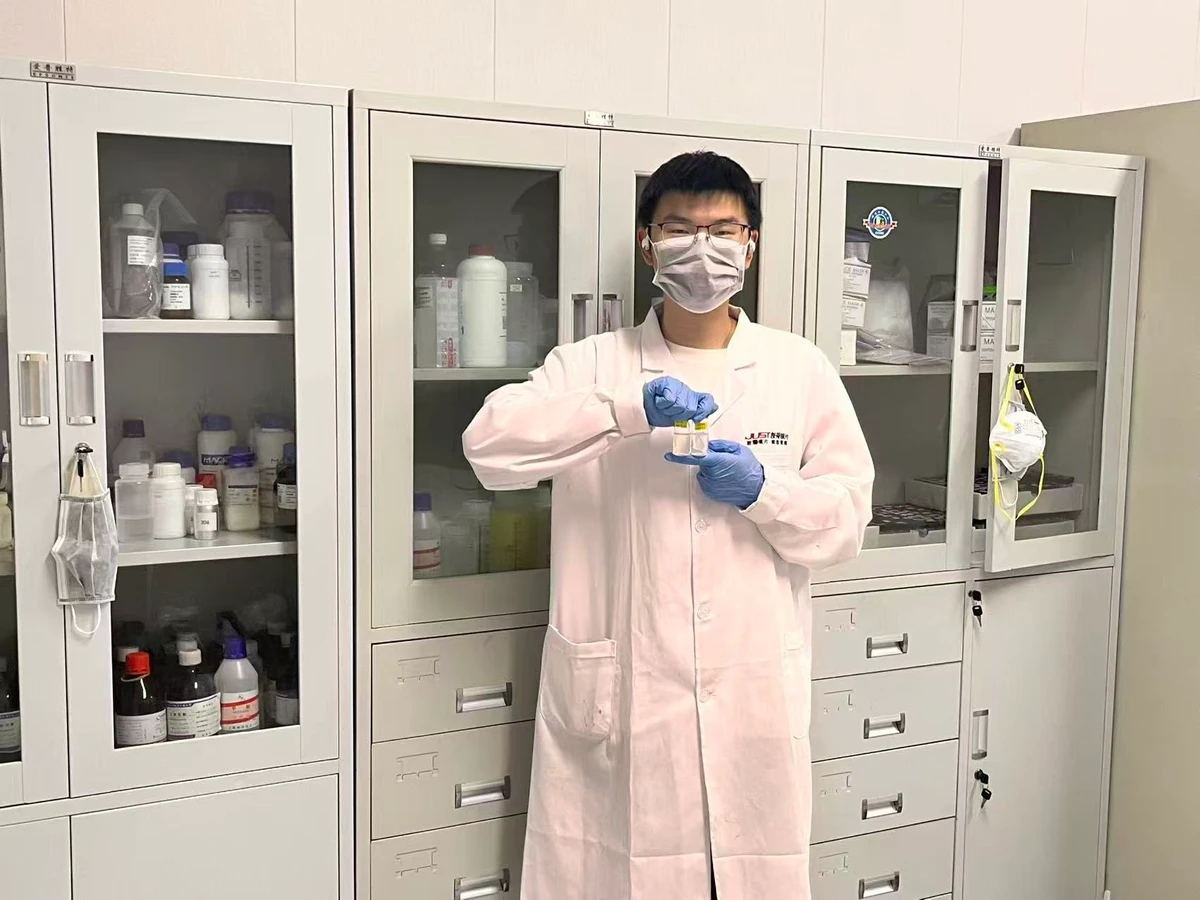
Lightarc’s development work focuses on this balance. Researchers evaluate coating formulations, curing conditions, adhesion, optical transmission, surface appearance, and abrasion behavior. They may also study performance after repeated cleaning, temperature changes, and contact with commonly encountered substances.
The goal is not simply to create a harder surface. The goal is to develop a complete lens system that performs reliably in everyday use while preserving visual clarity and wearing comfort.
From laboratory research to everyday lenses
This work is part of Lightarc’s broader effort to improve the material foundation of eyewear. By exploring metal-oxide sol systems and related hybrid materials, Lightarc aims to create lens surfaces that are clearer, more durable, and better suited to the demands of daily wear.
It is important to remember that coating performance depends on the complete lens system, including the base material, coating design, manufacturing process, and care habits. Even a well-designed hard coat should be cleaned with water and a suitable lens cloth, rather than with abrasive materials or household cleaners.
Lightarc will continue to develop and test new lens-material solutions with a practical goal: making high-quality eyewear more comfortable, reliable, and easier to use every day.
Technical references
This article is informed by publicly available research and technical information on sol-gel chemistry, transparent oxide coatings, polymer optical materials, and ophthalmic lens coatings, including:
– A. F. Carroll and M. J. V. V. R. et al., research literature on transparent silica- and zirconia-based nanocomposite coatings for polymer substrates.
– U.S. Food and Drug Administration, information on spectacle lenses and impact-resistant lens materials: https://www.fda.gov/medical-devices/consumer-products/eyeglasses-and-contact-lenses